
Computer programs have already achieved the ability to talk to people in such a way that no one will know who is after second page. Algorithms can analyze massive amounts of data every second. Technological progress can make life easier, but second The medal page remains a mystery. We are approaching new legal regulations that will allow banks to create psychological portraits of customers on a card payment basis. It cannot be excluded that such a surveillance tool will be sought by the State in the future.
The European Union authorities have issued a Regulation on the protection of personal data (GDPR), which will enter into force this May. This is a regulation intended to protect privacy. It seems that the Polish Sejm is going to apply this rule to the populace.
The computer program will assess whether we have an exemplary lifestyle
Banks have long since started using new technologies that affect privacy without any regulation. The latest developments in computer science help them make decisions about their creditworthiness.
The history of card payment allows to assess, among others, whether someone abuses party lifestyle. If the customer regularly pays with a card in bars or bookies, then artificial intelligence will suggest that credit for him is a risk. The possibilities of psychological profiling are much wider.
A bank that gives a mortgage to a marriage would like to know that a young couple is doing well. This is a factor that increases the certainty of timely repayment. Artificial intelligence can alert that someone e.g. buys a lot of flowers bouquets away from home. Informed people employed in banking could probably list dozens of such examples. Such knowledge is certainly not readily communicated to customers.
The EU Regulation was intended to protect our privacy
The authorities in Brussels have clearly seen the danger of uncontrolled banking surveillance and have sought to reduce or at least civilise this. The GDPR Regulation provides that banking computer profiling is allowed when a given contract requires it either with the consent of the client.
However, individual countries were left behind third exit – regulation by national law. The Polish legislator intends to choose this last option and simply allow computer profiling for credit decisions. There may be fundamental doubts as to whether the government project is in line with the direction outlined by the EU authorities.
What could be the next step?
It can be comforted that banks will obtain a legal tool that would, at worst, deprive someone of the ability to obtain credit. However, the fact that private life x-rays with artificial intelligence are legal may be worrying. Most recipients of this digital verification will probably never know about it.
However, it is not certain that similar analytical knowledge will not be acquired by the central authorities in the future. Currently tax authorities can request banks to provide information about bank transfers if they suspect someone, for example, of not paying the tax.
It is possible to imagine that in the future the Sejm will adopt an amendment to the law to provide information on financial psychological profiles when this is required by "important considerations". It remains to be hoped that such a vision will not become a reality.
Source: https://www.forbes.pl/opinie/banki-beda-inwigilowac-klientow-dzieki-portretom-psychologicznym/ej2dst4
Author:
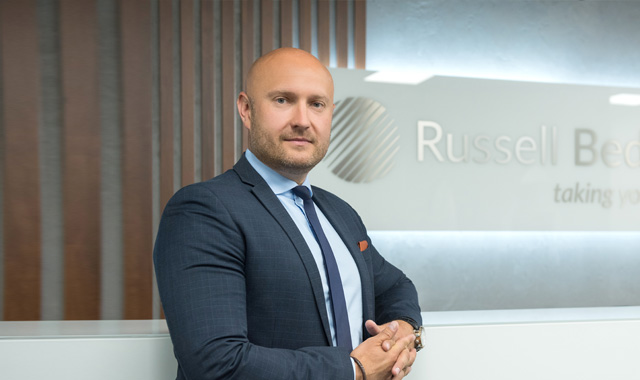
Andrzej Dmowski
Managing Partner Russell Bedford, Doctor of Legal Sciences, Lawyer, Tax Advisor, Restructuring Advisor, Certified Public Accountant – Expert Auditor in Ireland, Certified Fraud Examiner - Expert in Crime Detection and Abuse, Certified Internal Controls Auditor - International Internal Auditor.
Graduate of the University of Cambridge - British Centre for English and European Legal Studies - Faculty of Law and Administration, Graduate and Fellow of the Faculty of Law and Administration of the University of Warsaw.
Specializes in settlement of transactions between related entities - transfer pricing, legal and tax aspects of M&A and issues concerning derivatives of financial instruments.