
Image is free for use on websites (even websites with ads) if you credit www.gotcredit.com with an active link. Following post-marketing experience, 2018 changes in use 50% the cost of obtaining revenue from copyrights, their application has in practice raised many doubts as to who can benefit from it and what conditions must be met. The Minister of Finance took his time with the explanations that taxpayers had to wait for almost 2 years.
The explanation finally appeared in the form of General Interpretation No Dd[3].8201.1.2018 Minister of Finance dated 15 September 2020 [1], (hereinafter referred to as: General Interpretation of the Minister of Finance).
General interpretations are, according to Article 14a(1)(1) Act dated 29 August 1997 – Tax Ordinance (Journal of Laws of 2020, item 1325, as amended, Further: o.p.), as an expression of efforts to ensure uniform application of tax law by authorities.
The issuing of such interpretations by the Minister of Finance, whether on request or ex officio, provides for the possibility of uniform application of controversial tax rules.
When used 50% the cost of obtaining revenue for the author's fee, such codification was certainly expected given the multitude of different interpretations of the tax authorities.
The general interpretation of the Minister of Finance concerns doubts about Article 22(9)(3) Act dated 26 July 1991 on personal income tax (i.e. Journal of Laws of 2020, item 1426 as amended, Further: u.p.d.o.f.).
It indicates that, in the case of revenue obtained from the use of copyright by authors and performers of related rights, within the meaning of separate provisions, or their provision of such rights, the cost is 50% revenue obtained [2].
Such flat-rate costs for creators and artists are certainly a positive record, especially since they often involve a high share of their own contribution, which does not generate additional costs in the form of materials or foreign services.
Amendment In 2018 increased the quota limit, which may not exceed the cost, to the upper limit first range of tax scale, i.e. 85,528 PLN [3]. At the same time, however, the list of activities for which flat-rate costs can be applied has been limited. This was then revised in response to requests from experts and taxpayers.
From 15 June 2018 another amendment was introduced which restored the right to apply flat-rate costs, among others: authors of books in the field of point (e) useful installments, manuals and manuals, or developers of computer games. In the current version of the Act, this provision applies to revenue generated by: [4]
creative activities in the fields of architecture, interior architecture, landscape architecture, construction engineering, urban planning, point (e) Raturas, art, industrial design, music, photography, audio and audiovisual works, computer programs, computer games, theatre, costume design, stage design, directing, choreography, artistic soldering, folk art and journalism;
artistic activities in the fields of acting, stage, dance and circus art, conducting, vocals and instrumentalism;
audiovisual and audiovisual production;
public activities;
museum activities in the field of exhibition, scientific, popularizing, educational and publishing;
maintenance activities;
the subsidiary law in question under Article 2(2) Act dated 4 February 1994 about copyright and related rights (Journal of Laws of 2019, item 1231; of 2020, item 288), to create a translation work for another;
R & D, scientific, scientific and educational, research, research and teaching activities in the university.
In addition, for natural persons benefiting from ‘youth relief’ [5], sum of the total flat-rate revenue costs determined under Article 22(9) u.p.d.o.f. and the abovementioned revenue released shall not exceed the upper limit first the tax scale range.
When you think about copyrights you should refer to Act dated 4 February 1994 about copyright and related rights (i.e.
Journal of Laws of 2019, item 1231 as amended), in which they are defined as any manifestation of creative activity of an individual nature, determined in any form, regardless of the value, purpose and manner of expression (the track).
The track has been the subject of copyright since it was established, that is, such a form of work allowing you to get to know it third, Even if it was unfinished [6].
In the general interpretation of the Minister of Finance, the conditions are listed, the fulfilment of which only together makes it possible to apply to remuneration the rate 50% the cost of obtaining revenue. It is necessary to:
- the creation of a work which is the subject of copyright, which determines the use by the creator of copyright and allows for the disposal of property rights to the work,
- having objective evidence of the creation of the copyrighted work,
- a clear separation of fees from other remuneration components, this condition not including the cases in which the 50% the cost of obtaining revenue may be applied to the entire remuneration of the creator.
Unless, in the case of a civil contract with a creator, the self-determination of the remuneration subject to a flat-rate cost is not complicated, the situation in the case of the worker's work is different.
The Minister of Finance emphasises, on the basis of judgments, that in order to be able to apply this preferential solution, the work should not only have adequate documentation (based on Article 180(1) This may be all that can contribute to the clarification of the case, and it is not against the law, such as the records of the resulting works), but it should also be clearly defined in the employment relationship.
This can be done both in the record of the contract of employment, where a certain part of the salary will be a fee for the work created, as well as by determining the percentage of the time allocated by the worker to work on the work in question, or on the basis of the work records.
Of which second However, it should be borne in mind that the decisions of the Supreme Court indicate that the same term is not sufficient, as such distinction does not indicate whether any work was actually created or arose.
The general interpretation of the Minister of Finance indicates that the determination of remuneration on the basis of the working time, either based on a percentage or on records, combined with attribution to a particular work, will allow the application of 50% flat-rate costs up to a certain part of the salary.
As this standard constitutes lex specialis in relation to the general principles for establishing the cost of obtaining revenue, ‘only if it is clearly established that the revenue is covered by copyright will it be possible to apply the increased cost of obtaining revenue. In any other case, the determined costs should be used under Article 22(2) u.p.d.o.f.’ [7]
[1] General Interpretation No Dd[3].8201.1.2018 Minister of Finance dated 15 September 2020 on the application 50% This appropriation is intended to cover the following expenditure: 2020 item 107.
[2] These costs shall be calculated on the basis of income less the premiums deducted by the payer during the month in question for pension and sickness insurance. Under Article 26(1)(2) point (b) u.p.d.o.f., which is based on this revenue.
[3] Article 22(9a) This limit also applies to flat-rate costs incurred for:
- payment of the creator for the transfer of the ownership of the invention, topography of the integrated circuit, utility design, industrial design, trademark or decorative design - in the amount 50% revenue obtained;
- licence fee for the transfer of the right to use the invention, topography of the integrated circuit, utility design, industrial design, trade mark or ornamental design received In the first year of the licence from first the entity with which the licence agreement was concluded - in the amount 50% revenue obtained.
[4] According to Article 22(9b) u.p.d.o.f.
[5] Article 21(1)(148) u.p.d.o.f.
[6] Article 1(1)(3) and Article 8. section 1 the mentioned bill.
[7] Judgment of the Chief Administrative Court of 26 April 2017, reference no. II FSK 3865/14.
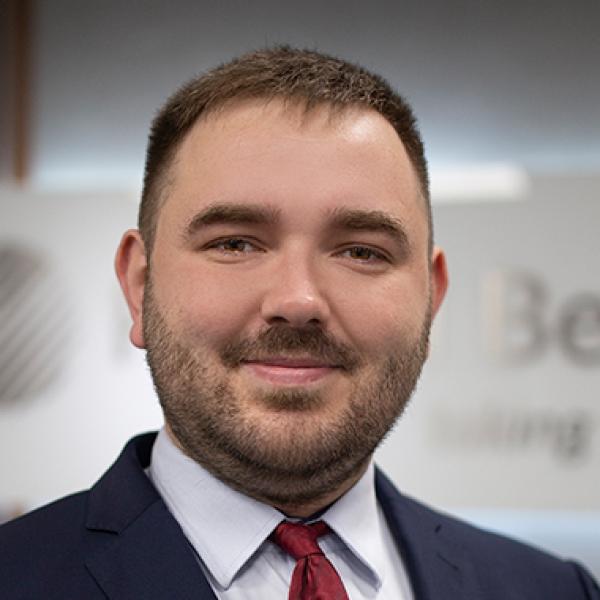
Author: Damian Kuszewski
The author is a graduate of the Warsaw School of Economics in Finance and Accounting, and is currently a law student at SWPS. From 2018 Associated with Russel Bedford Poland. His professional interests are tax law and, in particular, income taxes.