
Can the government look at our social media profiles to verify us? You'd think there's nothing in the way because there's no rule against it. It is the principle of "which is not prohibited by law".
However, this principle does not apply to the actions of state authority towards citizens. In this respect, the mechanism is the opposite. According to Article 7. The Constitution of the Republic of Poland "public authorities operate on the basis and within the limits of the law".
It follows from this that state authorities are only allowed to take over against citizens if the legal provision expressly permits this. Nor can such powers be extended beyond the statutory limits. This is the foundation of constitutional law not only in Poland, but throughout Western legal culture.
On the other hand, proof in the case may be anything not excluded by the Act from the catalogue of evidence (e.g. the mystery of confession). Legal rules sometimes interfere.
Social media as proof that someone is not ill
An employee who receives medical leave for rest purposes, not health, can unwittingly reveal the illusion he creates. one a holiday photo uploaded to a virtual profile during a fake illness is a potential proof of dishonesty towards the employer and ZUS. For this reason, some officials seek evidence on social media.
Is such an action of ZUS acceptable? There is no legal provision that allows this institution to view private profiles online. On the other hand, such information from virtual reality has not been subject to an evidence ban by the Act.
However, so far more legal arguments have appeared to be in favour of ZUS. Some people hoped that assistance for the protection of our privacy would come from Brussels with the entry into force of personal data protection regulations (GDPR Regulation).
The EU GDPR Regulation should give new quality
The GDPR Regulation is a legal act setting standards for the protection of personal data in the EU. The basic purpose of these regulations is to guarantee more privacy. GDPR assumes that the processing of personal data takes place with the express consent of a particular person. Private companies and state authorities cannot freely obtain data to identify someone's identity.
It seemed that the entry into force of EU legislation would make ZUS abandon the method of verifying citizens using social media. Unfortunately, there are indications that no one is going to give up the controversial practice.
Detecting unreliable medical exemptions using holiday photos may seem trivial, but this is just a clipping of a larger whole. It is about balancing borders between the interests of the state and protecting privacy.
Source: https://www.forbes.pl/praca/czy-zus-moze-sprawdzac-na-profile-w-mediach-spolecznosciowych/x4rvl1q
Author:
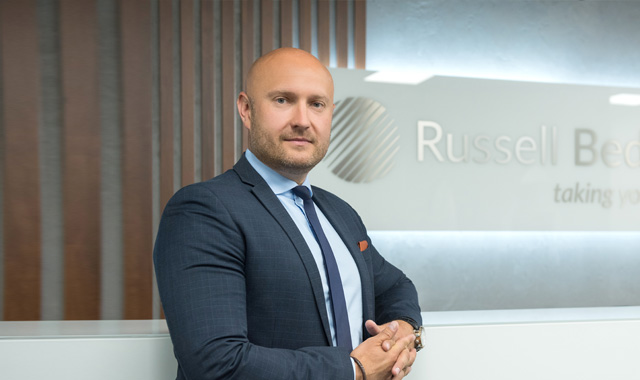
Andrzej Dmowski
Managing Partner Russell Bedford, Doctor of Legal Sciences, Lawyer, Tax Advisor, Restructuring Advisor, Certified Public Accountant – Expert Auditor in Ireland, Certified Fraud Examiner - Expert in Crime Detection and Abuse, Certified Internal Controls Auditor - International Internal Auditor.
Graduate of the University of Cambridge - British Centre for English and European Legal Studies - Faculty of Law and Administration, Graduate and Fellow of the Faculty of Law and Administration of the University of Warsaw.
Specializes in settlement of transactions between related entities - transfer pricing, legal and tax aspects of M&A and issues concerning derivatives of financial instruments.