
Progressive automation, and thus changing reality, has an increasing impact on the labour market and wages. Over time, the involvement of machines in the acquisition of human tasks will be even greater, and the development of automation may result in less human work being needed. It may therefore be necessary to introduce new ways of allocating income in society. one such benefits may be unconditional base income.
The idea of BDP is to eliminate economic coercion. This is a universal service that should be granted to every citizen regardless of social status or income. BDP is unconditional, so in order to obtain income from this, there is no need to comply with any requirements other than having a country's nationality, as labour migration may be the biggest threat to BDP. It is worth mentioning that access to such a benefit should be strictly controlled as it may pose a threat to the financial security of the country.
For benefits 500 plus for every child we can talk about a step towards checking in practice unconditional basic income in Poland
Increasingly, new countries are opting for experiments to implement BDP. In Germany, another experiment is to be launched in May to test the effects of BDP in practice. Meanwhile 31 December the experiment ended there: 560 EUR for two one thousand by two years.
In Switzerland, in 2016 thanks to the referendum, the citizens of this country voted against the introduction of BDPs in their country. It was considered a harmful concept for the economy. The French also decided on a similar experiment.
As part of the experiment, all covered by the guaranteed wage scheme were to receive a 1,000 EUR per month – regardless of age or income. The French announce that the aim of this programme will be to examine the impact of BDP on the labour market.
The most controversial assumption of BDP is that it is a tool to counteract the spread of society to the rich and the poor. Therefore, the main source of funding for BDP should be the relevant tax system. In addition to eliminating reliefs and raising social tributes, tax progress is listed as the primary source of funding. With the development of BDP benefits, the tax burden will increase, allowing income to flow from the narrow richest group to the poorest, who were forced to be excluded from the labour market.
In some countries, this kind of income was sought, but only for a time and for a selected group of citizens. Canada one thousand by five years received money for benefits on the basis of BDP. As a result of this experiment only one hundred The students left their jobs, the students began to learn better and the parents had more time for them, during the experiment much less people became ill. However, the experiment was not continued.
In Finland in 2017 random two one thousand the unemployed who were to receive 560 EUR A month. The Helsinki government also announced that the project would not continue.
Returning to Germany - according to recent surveys in this country half of citizens would support 1,000 EUR monthly non-compulsory income.
Before introducing a BDP equivalent in Poland, it is worth reading the results of experiments conducted in other countries. Using the experience of others, we can introduce a solution that can have a positive impact on society. Otherwise, the originator exposes himself to the charge of offering election sausage.
source: https://www.forbes.pl/opinie/500-plus-na-kazde-dziecko-czyli-bezwarunkowy-dochod-podstawowy/zdrgpww?utm_source=www.forbes.pl_viasg_forbes&utm_medium=referal&utm_campaign=leo_automatic&srcc=ucs&utm_v=2
Author:
Andrzej Dmowski
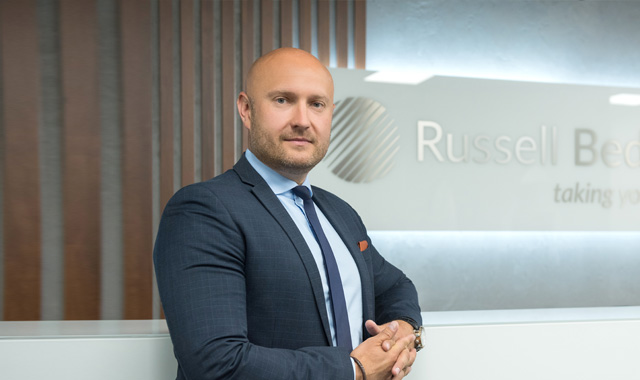
Lawyer and Doctor of Legal Sciences of the University of Warsaw. From 2011 one from Managing Partners in Russell Bedford Poland. Previously on the BDO advisory network, as well as Deloitte & Touche. Author of the book “Transfer Prices”, co-author of the commentary “The Corporate Income Tax Act”, author of many publications on tax law.